Why “Sorry Korean”
Korean often feels difficult because it is taught without the situations that make it make sense.
Sorry Korean puts the context back.
You learn who is speaking, who they are speaking to, what is happening between them — and why that Korean form belongs in that moment.
Once you understand that, the grammar no longer feels random. It feels obvious. It feels usable. It even feels fun.
Sorry Korean. It shouldn’t be this easy.
Why this is different
01
Not the textbook version — the real reactions, the real phrasing, the things that never quite make it into a lesson plan.
02
Every cultural moment turns into real Korean you practice out loud — with other students, or with Yijun, right there in the same class.
03
Max 6 students per cohort. When someone’s lost, it shows — and it gets fixed. When someone’s ready for more, they get more.
One pattern. Endless sentences.
Swap either side — the pattern doesn’t change. Only what you plug into it.
The program
Learn how Koreans actually speak, react and connect — and build the Korean to join in yourself.
For learners who know very little Korean — or have studied before but still can’t quite build a sentence of their own.
See the 4 weeks ↓ Track 2For learners who can already make basic Korean sentences but freeze when deciding which version of it to say.
See the 4 weeks ↓Price
$200
USD · one price, 4 weeks
Format
50 min · 4 weeks
Once a week, same cohort & time
Group size
Max 6
Nobody hides in a group this size
Classes run mostly in English — so you’re thinking about Korean, not lost in it.
Track 1 — First Connection — jump to Track 2 →
Build your first real Korean sentences — and a simple system you can keep expanding long after the course ends.
By the end of the four weeks, you’ll be able to
Why do Koreans often ask about your age, job or where you’re from so early in a conversation? It’s not just small talk — it’s how they figure out how to speak to you. And the pattern behind all of it is one sentence: swap the noun, and you can introduce yourself, name what’s in front of you, or answer almost anything they ask.
What you’ll be able to do in Korean
Where you’ll start
How can the same Korean sentence become a completely different interaction? Korean doesn’t make you rebuild a sentence to ask it — the exact pattern from Week 1 does both jobs. You’re not learning a new structure this week. You’re finding out you already had one.
What you’ll be able to do in Korean
Where you’ll start
Why do Koreans say “this,” “that” and “the thing from before” so often? Korean doesn’t make you repeat a person or object’s name every time — once you and the other person are looking at the same thing, or you’ve already mentioned it, you just point: 이거, 그거, 저거. It’s less a vocabulary shortcut than proof that Korean conversation runs on what both people already know together.
What you’ll be able to do in Korean
Where you’ll start
What do Koreans actually say when someone asks “What do you do?” One ending — 해요 — turns a huge range of everyday words into full sentences: study, exercise, cook, like. It’s not every Korean verb, but it’s the fastest way to start talking about your actual life instead of textbook examples.
What you’ll be able to do in Korean
Where you’ll start
Plus everything from the past 3 weeks, combined — no major new grammar.
Track 2 — Same Meaning, Different Korean — ← back to Track 1
Learn which Korean sounds right for the person, the place and the situation — spoken or texted, casual or formal.
By the end of the four weeks, you’ll be able to
“I’ll check it” can come out three completely different ways in Korean, depending on who’s listening. Before any new grammar, you’ll learn to read that difference — so you stop guessing which version is “correct.”
What you’ll be able to do in Korean
Where you’ll start
나 versus 저, casual versus polite endings — these carry real information about the relationship. Get it wrong and it reads as a social move, not a grammar mistake.
What you’ll be able to do in Korean
Where you’ll start
The Korean that people actually text is often different from the Korean they say out loud — shorter, with things dropped, where one ㅋ versus ㅋㅋ can change how a whole message lands.
What you’ll be able to do in Korean
Where you’ll start
Formal Korean isn’t just “more polite” — it’s a different tool for a different job, and using it with a friend can create distance instead of respect. This week: when to reach for it, and when not to.
What you’ll be able to do in Korean
Where you’ll start
Plus everything from the past 3 weeks, combined — no major new grammar.
Final experience — take one everyday phrase and say it the right way for a close friend, a new acquaintance, a text and a formal message — and explain why each version fits.
Ready? Reserve your spot →
Who’s teaching
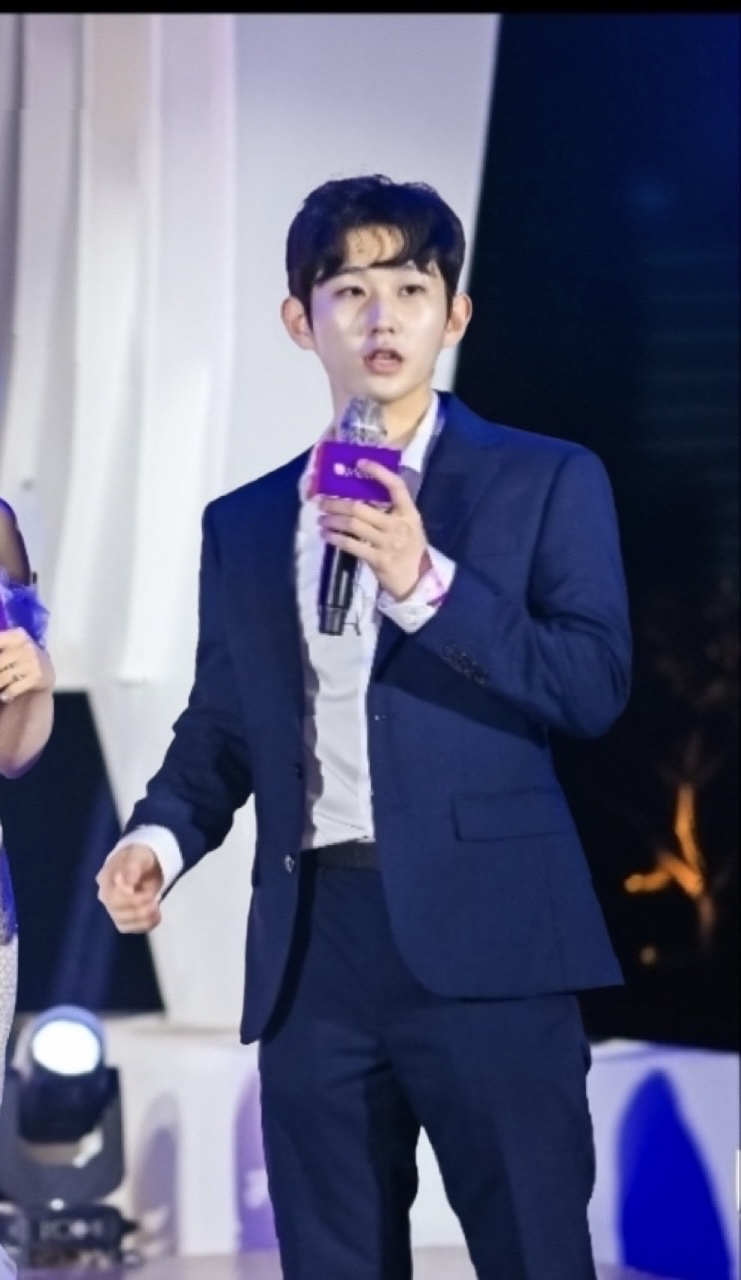
Long before Sorry Korean, Yijun was already teaching Korean one-on-one — which is exactly where he learned which parts textbooks skip. He’s not just a native speaker walking you through grammar. He’s the person who explains why Koreans said what they just said — the relationship, the mood, the thing left unsaid — and helps you say something back.
I didn’t wait
until I was fluent.
Pitched strategy to a Nasdaq-listed company
— in English.
Launched a brand in China
— in Chinese.
Not because my grammar was perfect.
Because I knew how to communicate.
That’s what
I’m teaching you.
Reviews
Every review here is from someone who learned with Yijun one-on-one. Sorry Korean is the first time you can get that same teaching live, in a group.
이준 선생님 다정하세요 (“Teacher Yijun is so warm”). He is always smiling and encouraging, never rushing you. Patient, professional, passionate to teach you. He paid attention to my pronunciation so well and gave me clear feedback. Finding someone who cares this much about both the person and the progress is a rare gift. He created a true ‘safe place’ for me.
Nuna
People! that guy is amazing! Extremely competent in imparting knowledge, patient, funny and always very polite. During the lessons I feel like my good friend is teaching me his native language. With my ADHD difficulties, Yijun adapts perfectly to my needs. Always helpful, even outside of our classes when I have questions.
Alex
My three children have been taking lessons with Yijun for a couple months and they have learned more during this time than after years of attending Korean school on weekends. He tailors the lesson material to an appropriate level for each kid and truly cares about his students' progress.
Helen
The lessons are fun and engaging but I also feel like I learn exactly what I need — a mix of vocabulary and grammar while practicing speaking and sounding more natural. Yijun has a great voice and speaks clearly. Honestly, can’t recommend him enough!
Emilia
Convinced? Reserve your spot →
Before you sign up
If you know very little Korean — or have studied before but still freeze up when it’s time to actually speak — start with First Connection. If you can already make basic Korean sentences but freeze up choosing between casual, polite and formal (or texting versus talking), Same Meaning, Different Korean is probably yours.
Every class is recorded and sent to you afterward, so you won’t lose the material. But the live, real-time practice — actually speaking, in the moment, with real reactions — is the whole point, and that part only happens once. It’s a small cohort and each class builds on the last, so try to make every one.
Yes — but it’s not a fixed worksheet. Each class shapes what comes next, so Yijun gives homework built around what your specific cohort actually needs after that session, not a generic packet everyone gets.
No refunds after enrollment — a spot held for you is a spot someone else didn’t get, which is the whole point of keeping cohorts at 6. We can’t promise a refund, but if something genuinely urgent comes up, email Yijun directly — he reads everything, and he’ll work it out with you.
Just Zoom and a willingness to speak from day one. That’s it.
4 weeks to stop freezing up and start reading the room — live, max 6 students, with Yijun himself.
Limited availability
Sorry Korean — Live Korean Classes with Yijun
Loading class times…